Most people looking for a home in Lahore run into the same problem. A finished house costs a lot, and paying for it in one go isn’t realistic. Waiting years for an under-construction project isn’t appealing either, especially while you are still paying rent.
A ready house on installment in Lahore is meant to solve both problems. You buy a home that is finished, or close to it, and pay for it over time instead of upfront.
This guide explains what “ready” really means, how installment plans work, what you will pay beyond the listed price, and what to check before you book anything.
Quick answer: A ready house on installment is a finished or nearly finished home you buy with a down payment and scheduled installments instead of one lump sum. Because the house exists, you can inspect it first. Before booking, confirm the home’s real status, the full payment schedule, when possession and ownership transfer happen, and every extra cost.
What Is a Ready House on Installment in Lahore?
It is a home that is already built, or close to handover, which you pay for in stages: a down payment first, then scheduled installments. When you actually get the keys depends on the plan, so the possession clause matters as much as the price.
The phrase combines two ideas. One is readiness, meaning how finished the home really is. The other is the payment structure, meaning how and when you pay. The payment side is easy to learn, and the next section covers it. Readiness is where buyers get confused, because some adverts use “ready” loosely.
Ready, Near-Possession and Under Construction: What’s the Difference?
These three labels describe very different buying situations.
| Status | What you can see | Possession | Main thing to watch |
| Ready | A finished home you can walk through | Immediate, or after a payment milestone set by the plan | Defects you only spot by inspecting, and unclear possession terms |
| Near-possession | Structure largely built, finishing still in progress | A short wait; get the date in writing | Delays at the finishing stage |
| Under construction | Drawings, a site, or a show unit | After construction is complete | Delivery delays, and a longer wait before you can live in or rent it |
A quick way to test a “ready” claim is to ask three questions:
- Can I walk through the exact unit I am buying, not just a show home?
- Are electricity, water and gas connections in place, or only planned?
- What does the agreement say about the possession date and the payment needed to receive it?
If the answers are vague, treat the home as near-possession or under construction until the developer proves otherwise.
Who Buys a Ready House on Installments?
This option suits people who want to live in or rent out a home soon but can’t pay the full amount at once.
- Families paying rent. Installments can replace rent with a payment that builds toward ownership.
- First-time buyers. A smaller down payment makes it easier to get started than saving for the whole price.
- Overseas Pakistanis. Seeing a finished home, or getting dated photos and a video of it, is easier than judging a project that exists only on paper.
- Small investors. A finished home can be rented sooner than one still being built, though rent depends on the area and is never guaranteed.
Many of these buyers look at townhouses, because a smaller plot often means a lower price than a standalone house. Our guide to townhouses in Lahore explains the format in more detail.
Installments aren’t for everyone. You are committing to a payment every month, sometimes with larger payments at set points. If your income is irregular or your budget is already stretched, a long plan can turn into a burden. Work out what you can pay comfortably, with some savings left over for emergencies.
That monthly figure is only one piece of the plan, so it helps to see how the rest is structured.
How Installment Plans Work in Lahore
Most installment plans for houses in Lahore have four parts: a booking amount, a down payment, regular installments, and a payment due at possession. Some plans add larger half-yearly payments. The names and amounts change from one developer to another, so the only reliable source is the written payment schedule for the exact unit you are buying.
Listings in Lahore often use terms like “balloon payment” and “possession fee”. If you have seen them and wondered what they mean, this section explains them.
Booking and Down Payment
The booking amount is the first, usually smaller payment that reserves a unit. The down payment is the larger upfront sum that confirms the purchase. Some developers combine the two, others list them separately, and a few add a “confirmation amount” in between.
Before you pay either, ask:
- Is the booking amount part of the down payment, or an extra charge?
- Is it refundable, and under what conditions?
- Will I get a receipt and a booking letter showing the unit number and price?
Don’t hand over money on a verbal promise. A reserved unit should be traceable to a document with your name on it.
Monthly, Half-Yearly and Possession Payments
After the down payment, the remaining price is spread across a fixed number of installments. These usually fall into three types:
| Payment type | What it is | What to ask |
| Monthly installment | A fixed amount paid every month | Does it stay fixed for the whole plan? |
| Half-yearly or balloon payment | A larger payment due at set points, often every six months | When exactly is each one due, and how large is it? |
| Possession payment | An amount due when the home is handed over | Is it included in the total price, or charged separately? |
The half-yearly payment is the one that surprises people. A plan can look affordable month to month, and then a large payment arrives and strains your budget. Add up a full year, not just one month.
The possession payment needs attention too. In some plans you take possession after paying a set percentage, and the rest continues as installments. In others, possession and ownership transfer happen only after full payment. These are two quite different arrangements, even if both are called “possession on installments”.
Your Payment Worksheet
You can test any plan with a simple table. Ask the developer for each figure and fill it in:
| Item | Amount | When due |
| Total price | [from agreement] | |
| Booking / down payment | [from agreement] | At booking |
| Monthly installment | [from agreement] | Each month for [number] months |
| Half-yearly payments | [from agreement] | Every six months, if any |
| Possession payment | [from agreement] | At handover |
| Total payable | Add every line |
Compare the total payable with the listed price. If they differ, ask what accounts for the gap. Longer plans sometimes carry a higher total than shorter ones, and you should know that before you commit.
With the mechanics clear, the practical question is what Barir Developers actually has available.
Ready Townhouses on Installment by Barir Developers
This is where the general guidance meets Barir’s own townhouses, so every figure here has to come from Barir’s records, not assumptions.
Available Units and Their Status
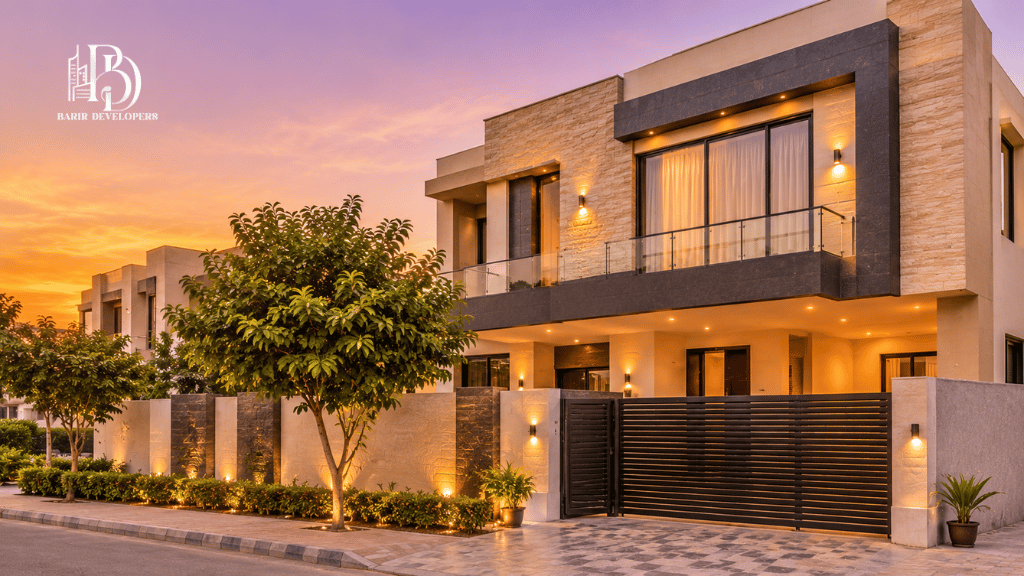
Barir’s townhouse options include Pine Homes, 4 marla townhouses and 5 marla townhouses.
A table gives the reader the same facts in the same place for each unit:
| Unit / project | Size | Status today | Price |
| 3 Marla Independent House | 03 Marla | Near-possession | 19,000,000 |
| 3 Marla Independent House | 03 Marla | Near-possession | 20,000,000 |
| 5 Marla Independent House | 05 Marla | Near-possession | 30,000,000 |
Two habits make this table earn trust. Label each unit’s status honestly, since buyers respect clear labelling more than an optimistic word that falls apart at a site visit. And add a “details verified on” date under the table, updating it whenever a price or status changes. For full details on a particular unit, send readers to its own page and keep this table as a summary.
Payment Plan Summary
Show the structure here and link to the unit page for the full schedule.
| Plan element | Barir Developers |
| Booking | 2,500,000 |
| Down payment | 2,500,000 |
| Monthly installment | 220,000 |
| Number of months | 24 |
| Half-yearly payments, if any | 1,250,000 |
| Possession payment | 3,720,000 |
Plans and prices can change, so confirm current terms in writing before you pay.
Why a Townhouse Suits Installment Buyers
A townhouse is a self-contained home, usually on a smaller plot than a standalone house. That often makes the total price easier to manage, and there is less to maintain.
The trade-offs are worth knowing:
- Townhouses are commonly built in a row or cluster, so walls may be shared with neighbours.
- Outdoor space is usually smaller than with a standalone house.
- The layout is often vertical, for example ground plus two storeys, which may not suit people who prefer to avoid stairs.
If you are still comparing home types, our townhouses in Lahore guide explains how townhouses differ from independent houses and apartments.
How to See a Unit Before You Commit
A table is no substitute for walking through the home. On a visit to a Barir townhouse:
- Ask to see the exact unit, or one built to the same specification, and ask which it is.
- Check the finishing: walls, floors, doors, windows, fittings, and any visible dampness or cracks.
- Test taps, switches and drainage where you can.
- Ask which utility connections are active now and which are still planned.
- Ask for the booking form and payment schedule in writing, and read them before paying.
Buyers abroad can reasonably ask for a live video tour and dated photos of the specific unit.
A shortlist tells you what you could buy. It doesn’t yet tell you what you will pay in total.
What You Really Pay: Costs Beyond the Price
The price on a listing is the start of the cost, not the end. Over an installment plan you will usually pay for a few things that were never part of the headline figure. None of them is unusual, but they catch buyers out when nobody mentions them early. Ask for a written list of every charge before you pay the booking amount.
Costs to Ask About
| Cost | What to ask |
| Transfer and registration | Who pays, how much, and when is it due? |
| Taxes on purchase | Which taxes apply, and who pays each one? |
| Maintenance or society charges | Is there a deposit or monthly fee, and from which date? |
| Utility connections | Are electricity, gas and water already connected, or will you pay for them? |
| Possession charges | Is the possession payment included in the total price? |
| Extra work | Will you need paint, fittings, curtains or furniture after handover? |
| Late payment charges | What happens if you miss an installment? |
Property taxes and fees in Pakistan change from time to time, so a figure copied from an old article may be wrong. Ask the developer, and confirm with a lawyer or the relevant government office before relying on a number.
A fuller walkthrough is planned as its own guide.
Compare the Total Payable With the Listed Price
Add up everything you will pay across the plan: booking amount, down payment, monthly installments, half-yearly payments and possession payment. Then compare that total with the listed price.
If the numbers differ, ask why. A longer plan can come with a higher total than a shorter one. That isn’t necessarily wrong, but you should see it in writing and decide whether the longer plan is worth it for you.
How Much Can You Afford?
A plan can look affordable on paper and feel uncomfortable in real life. A simple test helps:
- Write down your monthly income after regular expenses, and note anything irregular.
- Take the largest payment in the plan, often a half-yearly or possession payment, not just the monthly amount.
- Ask whether you could cover it without borrowing.
- Keep an emergency cushion that is separate from the plan.
There is no universal share of income that is right to commit, because family size, job security and other loans differ. If a step feels tight, a lower down payment with a longer plan, or a smaller home, may fit better than stretching for a larger one. Also read the agreement for any clause that lets the developer raise the price during the plan.
Even a fair plan can run into trouble if the paperwork or the project isn’t what it seems, which is why the next section covers what to check before you book.
Checklist Before You Book
Most problems with installment purchases don’t show up on day one. They appear a year or two later, when a delivery date slips, a document turns out to be incomplete, or a clause nobody read starts to matter. A short checklist before you pay can prevent most of them. Treat the points below as questions to put to the developer, and keep the answers in writing.
Check the Project and Its Approvals
Start with whether the project is legally in order.
- Approval status. Ask which authority approved the project, and ask to see the document. A verbal “yes, it’s approved” isn’t enough.
- Land title. Ask how ownership of the land is documented and whether your unit can be transferred to your name.
- NOC and permissions. Ask which permissions apply to this project and whether they are complete.
Legal requirements differ by project and change over time. For a purchase of this size, have a property lawyer read the documents before you commit.
Check the Developer
A developer’s record tells you more than its advertising does.
- Ask for the addresses of projects it has already handed over, and visit at least one.
- If you can, speak to residents about delivery time, build quality and after-sales support.
- Look at progress on current projects. Dated photos and site visits are more reliable than renders.
- Confirm that the company named on the agreement is the one you have been dealing with.
You can follow current progress on our construction updates page.
Read the Agreement Before You Sign
The agreement is where promises become obligations. Read all of it, and have anything unclear explained, not skipped.
| Clause | What to look for |
| Price and total payable | Does the total match the schedule you were quoted? |
| Possession | What is the date or condition, and what happens if it is missed? |
| Ownership transfer | When does the property move to your name? |
| Price changes | Can the developer raise the price during the plan? |
| Late payment | What is the charge for a missed installment, and is there a grace period? |
| Cancellation | What happens to your money if you need to withdraw? |
| Extra charges | Are transfer, maintenance and utility costs listed? |
Keep copies of the signed agreement, every receipt, the booking letter, and any messages in which prices or promises were given.
What Can Go Wrong, and How to Reduce It
| Risk | How to reduce it |
| Delay in possession | Get a date or condition in writing, and check progress yourself before each large payment. |
| Unclear ownership | Confirm what you receive and when, and have a lawyer review the transfer terms. |
| Costs that grow | Ask for a written list of all charges and any price clause. |
| Missed payments | Plan for your largest payment, not only the monthly amount, and keep an emergency cushion. |
| Quality below expectations | Inspect the actual unit, or one built to the same standard, before you commit. |
No step removes risk completely, but each one makes a bad surprise less likely. A fuller version of this checklist, including the documents you may need, is planned as its own guide.
If the answers satisfy you, the buying process itself is simpler than it looks.
How to Buy a Ready House on Installments, Step by Step
The order matters more than the speed: verify first, pay later.
The Seven Steps
- Set your budget before you look. Decide the down payment you can afford and the largest single payment you could cover without borrowing.
- Shortlist units, not just projects. Pick the exact size and type, and ask for its status in plain terms: ready, near-possession or under construction.
- Visit the site. Walk through the actual unit, or one built to the same specification. Check the finishing, the utilities and the roads you would use every day.
- Ask for the full cost in writing. Get the payment schedule, the total payable and a list of extra charges, and compare the total with the listed price.
- Verify the paperwork. Review the project approvals, the developer’s record and the agreement, with a lawyer’s help.
- Book and pay with a paper trail. Pay only against a receipt and a booking letter that names the unit, the price and the plan.
- Track payments and possession. Keep a log of what you’ve paid and what is due. Before taking possession, inspect the home again and note any defects in writing.
The step buyers most often skip is the lawyer review, and it is usually the cheapest protection available.
Extra Care for Overseas Pakistanis
Buying from abroad is possible, but you rely more on documents and on someone you trust in Lahore, since you can’t inspect the home yourself.
- Ask for a live video tour and recent, dated photos of the exact unit.
- Appoint a trusted person or a lawyer in Lahore to visit the site and review documents. If you give anyone authority to act for you, get legal advice on how to do it properly.
- Pay through traceable channels, and keep proof of every transfer.
- Get everything in writing, including possession terms and what happens if a date is missed.
- Don’t pay on the strength of social media posts or voice messages alone.
The identity documents and procedures for overseas buyers can differ, so confirm them before sending money.
This topic will get its own guide.
Installments aren’t the only way to pay, and some buyers weigh them against a bank loan or a cash purchase.
Installments vs Bank Financing vs Paying in Full
Which one is best depends on your savings, your income and how much certainty you want. Compare them on the total amount you will pay and the risk you carry, not on the monthly figure alone.
| Developer installments | Bank financing | Paying in full | |
| How it works | You pay the developer over a set plan | A bank pays the seller and you repay the bank | You pay the full price at once |
| Upfront money | A down payment; size varies by plan | A down payment set by the bank’s terms | The entire price |
| Approval | Set by the developer | Eligibility checks by the bank | None |
| Extra cost to compare | Whether the total payable exceeds the cash price | Markup or interest, plus bank fees | Usually none; a discount may be possible |
| Main risk | Developer’s delivery and terms | Your ability to keep up repayments | Savings tied up in one asset |
| Flexibility | Depends on the agreement | Depends on the bank’s terms | Highest, with no ongoing payments |
The table is a general guide. Terms differ by developer and by bank, so confirm every cell.
What to Compare Before You Choose
- Total payable. Add up everything you would pay from start to finish. A low monthly amount over a long period can add up to more than a shorter plan. Ask whether the cash price differs from the installment price.
- Your cash position. A larger down payment usually means smaller payments later, but it leaves less in reserve.
- What you can verify. With developer installments you rely on the developer’s record and the agreement. With a bank, the bank sets its own checks, and you still need to verify the property.
- How long you will hold. If you might sell early, check what the agreement says about transfers and early settlement.
Whichever route you take, ask three questions: Can I pay the balance early, and does that reduce the total? What happens if I miss a payment? What happens to the money I’ve paid if I need to withdraw?
A Note on Bank Financing
Bank and housing finance schemes in Pakistan have their own eligibility rules, markup rates and documentation, and these change. Some people also avoid interest-based financing for personal or religious reasons, which is a legitimate factor. Check current terms directly with the bank, not with older articles.
A deeper comparison is planned separately. Some questions will still be left over, so here are the ones buyers ask most often.
Frequently Asked Questions
Is it safe to buy a house on installments in Lahore?
It can be, but safety depends on the project and the paperwork, not the payment method. Risk drops when approvals are documented, the developer has a record you can check, and every price, date and payment is in writing. Verify these yourself before paying, and have a lawyer review the agreement.
How much down payment do I need?
It varies by developer and plan, so there is no standard figure. Some plans ask for less upfront and spread the rest over a longer period, while others need more at the start. Ask for the down payment, the monthly amount and every larger payment together, so you can judge the plan as a whole.
Can I take possession before I finish paying?
That depends on the agreement. Some plans give possession after a set percentage has been paid, and others only after full payment. Possession and ownership transfer can also happen at different times. Check the possession clause, and ask when the property is registered in your name.
What is the difference between a ready house and an under-construction house?
A ready house is finished, so you can inspect it and move in sooner. An under-construction house is bought on the promise of future delivery, which often means a longer wait and more uncertainty about the date and the final finish. A unit’s status should be stated in writing, not assumed from an advert.
Which documents should I ask for?
Ask for the booking or allotment letter, payment receipts, the sale or installment agreement, proof of the project’s approvals, and the documents covering ownership transfer. The exact list varies by project and stage, so confirm it with the developer and a lawyer.
Is an installment plan more expensive than paying in full?
Sometimes. A longer plan can carry a higher total than a shorter plan or a cash purchase, though not every developer prices it that way. Add up every payment across the plan, compare it with the cash price, and decide whether the flexibility is worth any difference.
Can I rent out the house while I’m still paying?
It depends on your agreement and on when you receive possession. If possession comes after a payment milestone, you may be able to rent the home out after that point, but check whether the agreement or community rules set limits. Rental income is never guaranteed, so don’t build your payment plan around it.
Can overseas Pakistanis buy a ready house on installments?
Many developers accept overseas buyers, but the process differs. Expect to rely on documents, a live video tour, and a trusted person or lawyer in Lahore who can check the property for you. Confirm the identity papers and payment methods required before sending money.
If your question isn’t covered here, the best next step is to ask Barir directly and keep the answer in writing.
Visit a Ready Townhouse in Lahore
Reading about plans only goes so far. The details that matter most, like the finishing, the surroundings, how the schedule feels against your budget, and how the developer answers difficult questions, show up when you visit or ask for a live tour.
Before you go:
- Know your budget, including your largest single payment.
- Ask which exact unit you are seeing and what its status is today.
- Request the payment schedule, the total payable and a list of extra charges in writing.
- Ask to see the project’s approval documents.
- Take notes and photos, and compare the answers with what you were told earlier.
You don’t need to decide on the first visit. A developer worth buying from will let you take the documents home, have a lawyer review them, and come back with questions.
To see Barir Developers’ townhouses, contact Barir Developers to arrange a visit, ask about current availability, or request the payment plan for a specific unit.
If you are still comparing home types before choosing a plan, our townhouses in Lahore guide covers how they differ from independent houses and apartments.
